

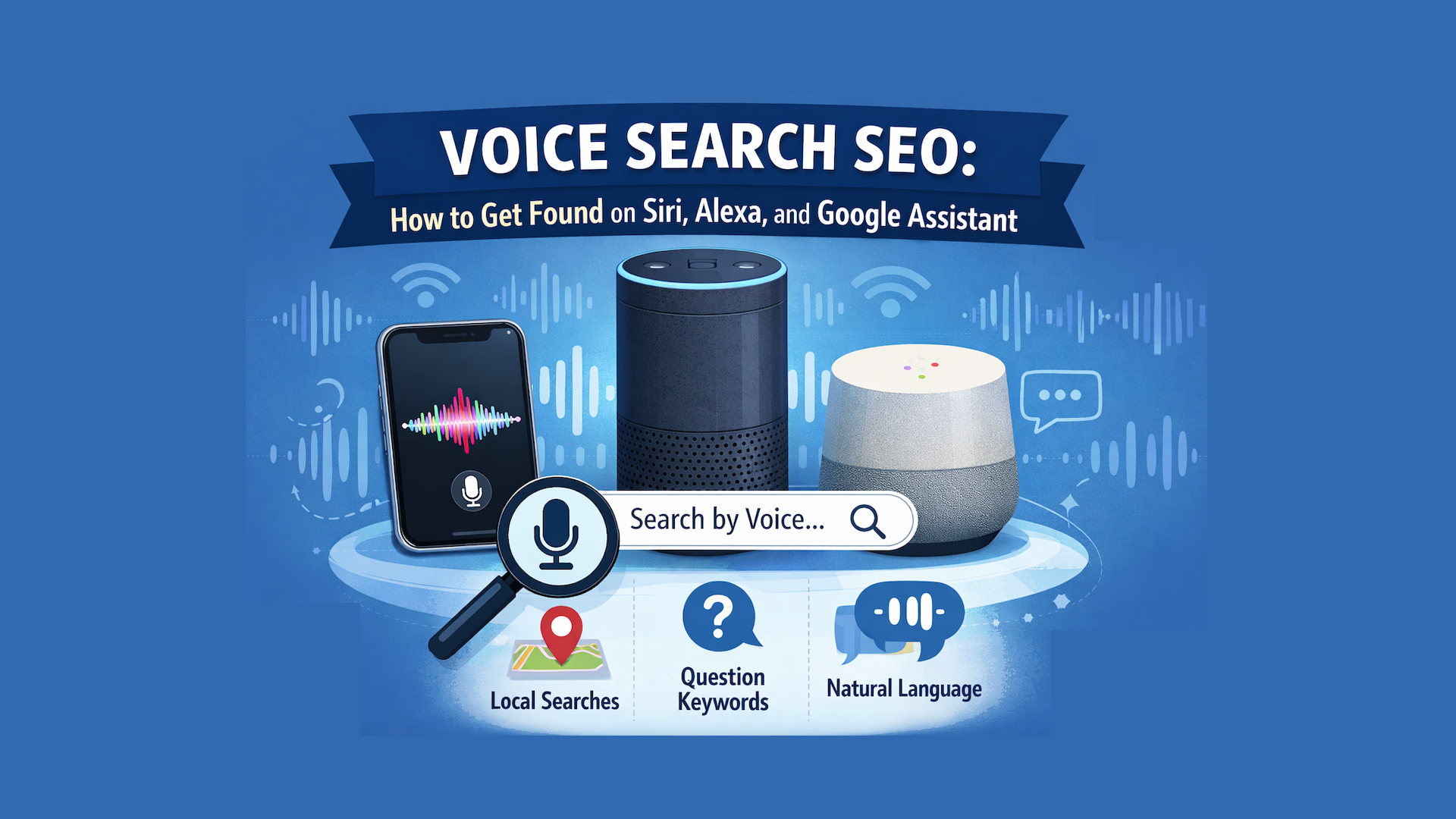
Voice Search SEO: How to Get Found on Siri, Alexa, and Google Assistant

Voice search is no longer a future trend. It is already part of daily life. People ask Siri for directions, Alexa for nearby services, and Google Assistant for quick answers while driving, cooking, or working.
If your business does not show up in voice search results, you are missing real customers who are ready to take action.
This guide explains how voice search SEO works, where voice assistants get their answers, and how to optimize your business so Siri, Alexa, and Google Assistant can find and recommend you.
What Is Voice Search SEO?
Voice search SEO is the process of optimizing your website and business listings so voice assistants can understand your information and read it out loud to users.
Unlike typing, people speak in full sentences when using voice search.
Instead of typing:
- “web developer Vancouver”
People say:
- “Who is the best web developer near me?”
Voice search SEO focuses on:
- Natural language
- Clear answers
- Local relevance
- Trust and accuracy
Why Voice Search SEO Matters in 2025
Voice search is growing because it is fast and hands-free. People use it when they want immediate answers, not long lists of websites.
Important facts:
- Voice assistants usually give one answer, not ten
- Most voice searches have local intent
- Assistants trust verified business data more than long blog content
If your information is unclear or missing, assistants will choose someone else.
How Siri, Alexa, and Google Assistant Choose Answers
Understanding where assistants get their data is the key to ranking.
Google Assistant
Google Assistant pulls information from:
- Google Search
- Google Business Profile
- Featured snippets
- Structured data (schema)
If you rank well in Google and your business profile is optimized, you have a strong chance to appear in voice results.
Siri
Siri relies on:
- Apple Maps
- Apple Business Connect
- Bing search results
If your business is not listed correctly on Apple Maps, Siri may never mention you.
Alexa
Alexa uses:
- Bing
- Yelp
- Amazon business data
This means Yelp reviews and Bing listings matter even if you usually focus only on Google.
Foundational Steps to Rank on All Voice Assistants
Claim and Optimize Your Business Listings
Your first step is to make sure voice assistants know your business exists.
You must claim and optimize:
- Google Business Profile
- Apple Business Connect (Apple Maps)
- Bing Places for Business
- Yelp
Make sure your Name, Address, and Phone number (NAP) are:
- Correct
- Consistent
- The same everywhere online
Add:
- Business hours
- Photos
- Services
- Categories
- Service areas
Voice assistants trust complete listings more than websites alone.
Build Trust with Customer Reviews
Reviews play a big role in voice search rankings.
Why reviews matter:
- Assistants prefer trusted businesses
- Higher ratings increase selection chances
- Reviews signal real user experience
Best practices:
- Ask happy customers for reviews
- Respond to all reviews professionally
- Keep reviews active on Google, Yelp, and Apple Maps
Make Your Website Fast and Mobile-Friendly
Most voice searches happen on mobile devices.
Your website should:
- Load fast
- Work well on phones
- Have clear headings
- Avoid clutter
Slow or broken websites reduce trust and rankings.
Voice Search Keyword Strategy
Voice search keywords are different from traditional SEO keywords.
Use Long-Tail, Conversational Keywords
People speak naturally, not in short phrases.
Examples of voice-friendly keywords:
- “Who offers Shopify development near me?”
- “What is the best SEO agency for small businesses?”
- “Where can I find a web developer in Vancouver?”
These long-tail keywords attract users who are ready to take action.
Focus on Question-Based Searches
Most voice searches start with:
- Who
- What
- Where
- When
- Why
- How
Your content should answer these questions clearly and directly.
Creating Content That Voice Assistants Can Read
Write Short, Direct Answers
Voice assistants prefer clear answers between 40 and 60 words.
Avoid:
- Long paragraphs
- Complex language
- Marketing fluff
Use:
- Simple sentences
- Clear facts
- One answer per question
Build Strong FAQ Sections
FAQs are one of the best tools for voice search SEO.
Good FAQ content:
- Answers real customer questions
- Matches spoken language
- Uses clear headings
Example:
Question: How does voice search work for local businesses?
Answer: Voice search works by pulling trusted business information from Google, Apple Maps, and directories. Assistants choose businesses with accurate listings, good reviews, and clear answers.
Local Voice Search Optimization
Most voice searches are local.
Examples:
- “Best accountant near me”
- “Plumber open now”
- “Web design company in Toronto”
To optimize for local voice search:
- Include city and service names naturally
- Create location-specific service pages
- Keep NAP consistent everywhere
- Add service areas to listings
Local relevance often matters more than website authority.
Using Schema Markup for Voice Search SEO
Schema markup helps voice assistants understand your content.
Recommended schema types:
- LocalBusiness
- FAQPage
- Product or Service schema
Schema tells assistants:
- Who you are
- What you offer
- Where you are
- When you are open
This increases your chances of being selected for spoken answers.
Assistant-Specific Optimization Tips
Google Assistant SEO Tips
- Optimize the Google Business Profile fully
- Aim for featured snippets
- Use FAQ schema
- Answer questions clearly on your website
Siri Voice Search SEO Tips
- Claim Apple Business Connect
- Ensure Apple Maps' accuracy
- Optimize for Bing SEO
- Keep business categories correct
Alexa Voice Search SEO Tips
- Maintain strong Yelp reviews
- Claim Bing Places listing
- Ensure business info matches Amazon data
Common Voice Search SEO Mistakes to Avoid
- Ignoring Apple Maps and Bing
- Keyword stuffing instead of natural language
- No FAQ content
- Inconsistent business information
- Slow or outdated websites
These mistakes prevent assistants from trusting your business.
How to Measure Voice Search SEO Success
Voice search traffic does not always show clearly in analytics, but you can track progress by monitoring:
- Increase in local calls
- Growth in “near me” keywords
- Google Business Profile insights
- Featured snippet appearances
- Direction requests and messages
Voice search success often shows up as real actions, not just clicks.
Frequently Asked Questions
Is voice search SEO different from regular SEO?
Yes. Voice search focuses on conversational language, local intent, and direct answers instead of long-form keyword targeting.
Do I need a website for voice search?
Yes, but listings are equally important. Voice assistants often read business listings before websites.
How long does voice search optimization take?
Most businesses see improvement within a few months once listings, content, and reviews are optimized correctly.
Does voice search help small businesses?
Yes. Voice search favors local, trusted businesses, not just big brands.
Final Thoughts: How to Win Voice Search SEO
Voice search SEO is about clarity, trust, and usefulness.
If you:
- Keep your business data accurate
- Answer real questions clearly
- Focus on local intent
- Build trust with reviews
- Structure content for AI and assistants
You increase your chances of being the one answer people hear.
If you want your business to show up on Siri, Alexa, and Google Assistant, now is the time to optimize.
Contact our SEO experts today to improve your voice search visibility, local rankings, and AI-ready content strategy.
Let’s make sure your business is heard when customers ask.
Get A Quote
Reach Out and Bring Your Visions to Life
Get A Quote
Reach Out and Bring Your Visions to Life