

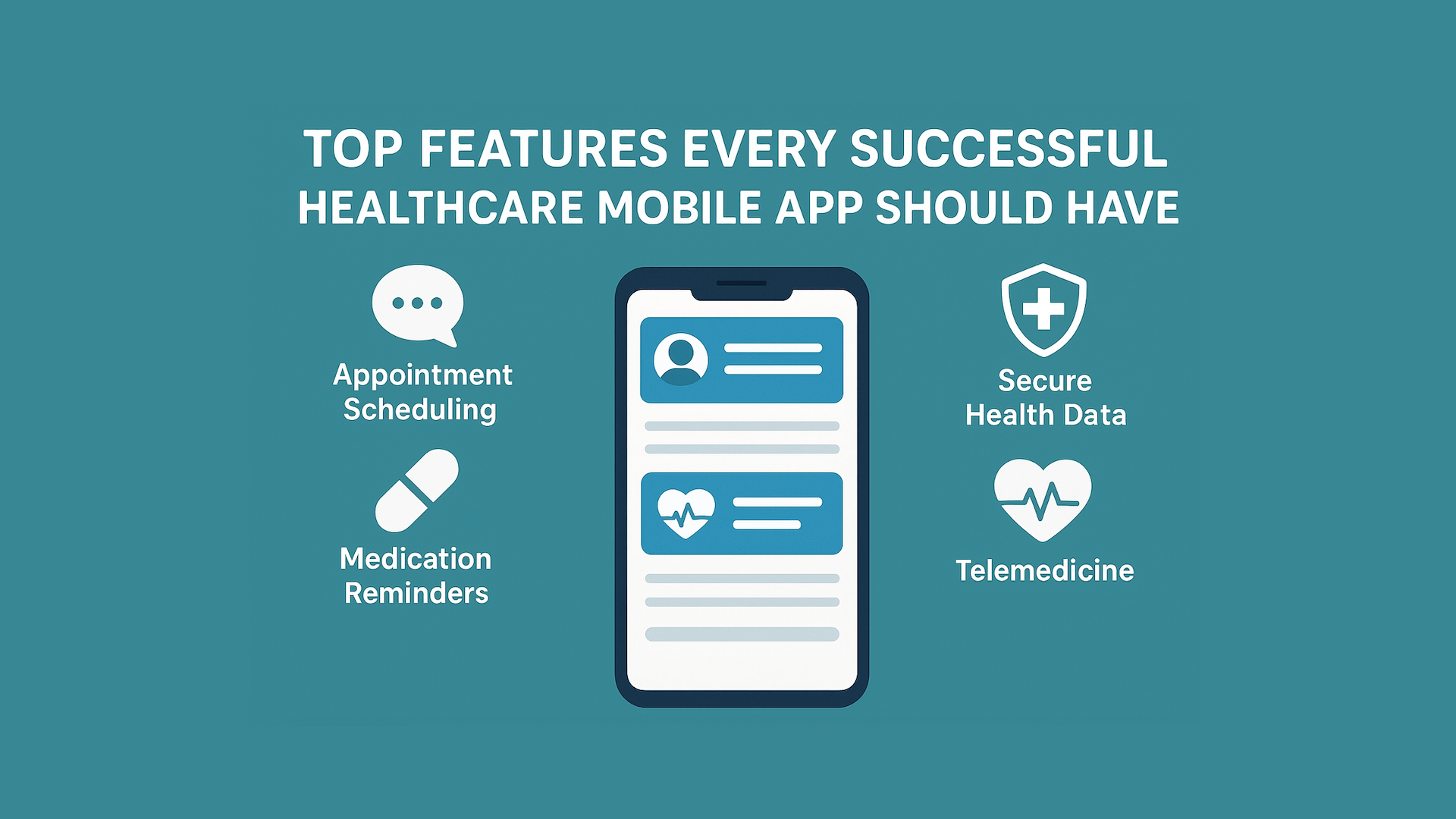
Top Features Every Successful Healthcare Mobile App Should Have
- Web Development
-

By Jaydeep
- October 10, 2025
The healthcare industry is rapidly evolving, and mobile technology is at the forefront. Patients and providers now rely on healthcare apps to simplify consultations, manage medical records, and monitor wellness. But what makes a healthcare app truly successful? In this guide, we explore the essential features for healthcare mobile app development, answer common questions, and show how to create apps that are secure, user-friendly, and reliable.
Why Healthcare Mobile Apps Are Important
Healthcare apps are more than convenience tools—they enhance patient care, improve communication, and streamline clinic workflows. According to Statista, the global mobile health (mHealth) market is expected to surpass $300 billion by 2027.
Successful healthcare app development requires understanding both patient and provider needs. The goal is to create a tool that improves access to care, encourages adherence, and delivers accurate, trustworthy health information.
Must-Have Features for a Successful Healthcare App
A top-tier healthcare app balances functionality, usability, and compliance. Here are the core features you should include:
1. Telemedicine and Remote Consultations
Telehealth has transformed healthcare delivery. A healthcare app should allow patients to:
- Schedule virtual consultations via video or audio calls
- Communicate securely with doctors through chat
- Receive follow-up care and prescriptions digitally
This feature enhances convenience, reduces hospital visits, and expands access to care, especially in remote areas.
2. Appointment Scheduling and Notifications
Automated appointment management is crucial for patient engagement. Key functionalities include:
- Booking, rescheduling, or canceling appointments
- Automated reminders via push notifications, email, or SMS
- Calendar integration for easy planning
This reduces missed appointments and ensures efficient clinic operations.
3. Prescription Management and Medication Reminders
Prescription management helps patients follow treatment plans. Features should include:
- Viewing current prescriptions
- Setting dosage reminders
- Ordering medication refills through partner pharmacies
Medication management improves adherence and patient outcomes.
4. Symptom Checker and Health Assessments
A symptom checker guides users on possible health issues. Features can include:
- AI-powered symptom analysis
- Health risk assessments
- Recommendations for doctor visits or lifestyle changes
This empowers patients to take proactive care of their health.
5. Health Tracking and Wearable Integration
Modern healthcare apps should integrate with wearable devices to track:
- Heart rate, blood pressure, and glucose levels
- Physical activity, sleep, and nutrition
- Progress visualization and personalized health insights
Tracking encourages preventive care and data-driven decisions.
6. Secure Messaging and Communication
Secure communication protects patient data while enhancing accessibility. Features include:
- Encrypted messaging between patients and providers
- Sharing test results, prescriptions, and images securely
- Ensuring HIPAA, GDPR, or local compliance
Trustworthy messaging is key to patient confidence.
Need a Healthcare App Developer?
Let our experts build a secure, feature-rich healthcare app for your business. From telemedicine to appointment management and secure messaging, we ensure a seamless user experience.
7. EHR/EMR Integration
Integrating Electronic Health Records ensures accurate and coordinated care:
- Access patient history and clinical notes
- Share updates between doctors and hospitals
- Streamline decision-making and reduce errors
8. Billing and Payment Integration
Digital payment options improve convenience for both patients and providers:
- Online payments and invoicing
- Insurance claim tracking
- Multiple payment options (credit/debit cards, UPI, wallets)
9. Emergency Alerts and Notifications
Emergency features enhance patient safety:
- Quick access to local hospitals or clinics
- Automatic notifications for critical health events
- Integration with wearable devices for real-time monitoring
10. Educational Resources and Wellness Guidance
An informative app can improve health literacy:
- Articles, videos, and tips on fitness, nutrition, and mental health
- Preventive care reminders and lifestyle recommendations
- Personalized health coaching
Bonus Features for Competitive Advantage
To differentiate your app, consider:
- Hospital Locator with Wait Times
- Insurance Companion
- AI-driven Health Insights
- Community Support and Forums
These features improve engagement, retention, and overall patient satisfaction.
Best Practices for Healthcare App Development
- Prioritize User Experience – Intuitive navigation, accessibility, and personalization matter.
- Ensure Compliance – HIPAA, GDPR, and local regulations protect data privacy.
- Secure Data Storage – Use encryption and secure servers.
- Plan for Scalability – Anticipate growing user numbers and data volumes.
- Iterate Based on Feedback – Continuous updates improve functionality and trust.
Frequently Asked Questions (FAQs)
Q1. What is the cost of developing a healthcare app?
A: Costs vary depending on features and complexity. A basic MVP can start around $5,000, while a full-featured app may cost $25,000 or more.
Q2. How do I ensure my healthcare app is secure?
A: Implement encryption, secure authentication, and comply with HIPAA, GDPR, or local regulations. Regular audits and updates also maintain security.
Q3. Can a healthcare app integrate with wearables?
A: Yes, apps can connect with devices like smartwatches or fitness trackers to monitor heart rate, sleep, and activity levels.
Q4. Should my app focus on patients or providers?
A: Both are important. Patient-facing features enhance engagement, while provider-facing features improve workflow and data accuracy.
Conclusion
Successful healthcare app development requires careful planning, robust security, and user-centric design. Core features like telemedicine, appointment management, health tracking, and secure communication ensure your app meets patient and provider needs. Bonus features and continuous feedback improve retention and engagement.
Investing in healthcare mobile app development today can improve patient outcomes, streamline operations, and position your app as a trusted healthcare solution.
Ready to build a healthcare app that patients trust and providers rely on? Contact our experts today to start your custom healthcare mobile app development journey. Transform your healthcare idea into a secure, user-friendly, and feature-rich app.
Get A Quote
Reach Out and Bring Your Visions to Life
Get A Quote
Reach Out and Bring Your Visions to Life