

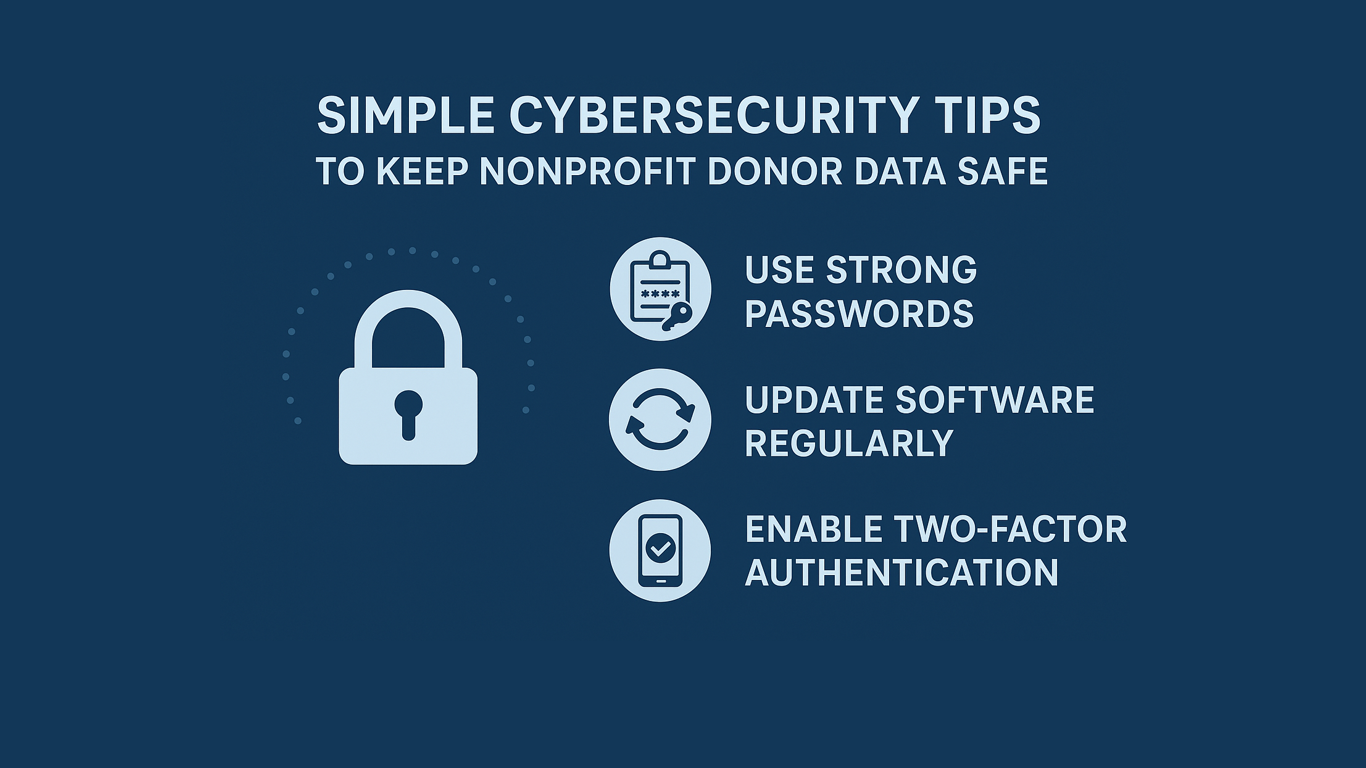
Simple Cybersecurity Tips to Keep Nonprofit Donor Data Safe
- Web Development
-

By Jaydeep
- October 17, 2025
Nonprofits handle some of the most sensitive information — donor names, email addresses, payment details, and personal stories. This data is valuable not just to your mission but also to cybercriminals looking for easy targets. Many nonprofits assume that because they are small or community-based, they won’t be attacked. Unfortunately, that’s not true. Hackers often target smaller organizations because they have weaker security systems.
This guide explains, in clear and simple language, how nonprofits can protect donor data without needing large budgets or advanced technical knowledge. You’ll learn practical cybersecurity steps, ethical data management practices, and ways to build lasting donor trust.
Why Cybersecurity Matters for Nonprofits
Cybersecurity isn’t just an IT concern — it’s a matter of trust. When donors give their information and money, they expect you to protect it. A single breach can damage your reputation, reduce donations, and even create legal problems.
Many nonprofits collect data through online donation forms, event registrations, and volunteer portals. If this data isn’t protected properly, it can be exposed through phishing attacks, weak passwords, or outdated systems.
By following simple steps, nonprofits can prevent most data breaches. The goal isn’t to become a cybersecurity expert but to adopt smart, consistent habits that protect your organization and your supporters.
1. Know What Donor Data You Collect and Why
Before you can protect data, you need to understand what you’re collecting. Common types of donor data include:
- Names and contact details (email, phone, address)
- Donation amounts and payment details
- Event participation records
- Communication preferences
- Demographic or interest data
Ask yourself:
- Do we really need all this information?
- Where is it stored — spreadsheets, emails, or cloud systems?
- Who has access to it?
Creating a simple “data map” helps you identify where data lives and who uses it. This makes it easier to secure and monitor.
2. Create a Clear and Honest Data Privacy Policy
A privacy policy shows donors that you respect their personal information. It should explain:
- What data you collect
- Why you collect it
- How you protect it
- How donors can contact you about their data
Use simple language. Avoid legal jargon. Post your policy clearly on your website and in donor communications.
Transparency builds trust — and donors appreciate organizations that care about their privacy.
3. Strengthen Passwords and Enable Multi-Factor Authentication (MFA)
Weak passwords are one of the most common causes of data breaches. Every team member should:
- Use a strong, unique password for each account
- Avoid reusing passwords across systems
- Use a password manager if possible
- Enable MFA for email, CRM, and financial systems
Multi-Factor Authentication adds an extra layer of protection by requiring a second form of verification — such as a code sent to your phone — even if someone steals your password.
4. Train Staff and Volunteers on Cybersecurity Basics
Your team is the first line of defense. Many cyberattacks start with phishing — fake emails that trick people into revealing passwords or clicking malicious links.
Hold short, regular training sessions on topics such as:
- How to spot suspicious emails
- How to report a possible cyber threat
- Safe use of shared devices and public Wi-Fi
- The importance of not sharing passwords
Even simple awareness can stop a potential data breach. Encourage a culture where everyone takes responsibility for data protection.
5. Encrypt and Secure Donor Information
Encryption protects your data by turning it into unreadable code unless someone has the right key to unlock it.
- Always use websites with “HTTPS” for donations and logins.
- Store donor information in secure, encrypted databases.
- Avoid storing credit card information unless absolutely necessary.
- If using third-party tools (like payment processors or CRMs), choose vendors with strong security certifications.
Encryption makes it much harder for hackers to use stolen data.
6. Keep Software and Systems Updated
Outdated software is one of the easiest ways for hackers to gain access. Regularly update:
- Website plugins and themes
- Donation management systems
- Antivirus and firewall tools
- Operating systems and browsers
Set up automatic updates whenever possible. Also, back up your data weekly — either in the cloud or on an encrypted external drive. Test your backups to ensure they work properly.
7. Limit Data Access and Use Role-Based Permissions
Not every staff member or volunteer needs access to donor data. Restrict permissions based on roles.
- Give access only to those who need it for their work.
- Remove old accounts from staff or volunteers who leave.
- Review user access regularly.
This minimizes the risk of accidental or intentional misuse of data.
8. Prepare a Simple Incident Response Plan
Even with precautions, mistakes can happen. Be ready with a plan.
Your incident response plan should answer:
- Who will lead if a data breach occurs?
- How will you notify donors and partners?
- How will you restore systems and data?
Document this plan and review it at least once a year. Practice how you would respond to a fake breach. Being prepared reduces panic and response time.
9. Partner With Trusted Technology and Security Vendors
Choose software and vendors that prioritize security. Look for:
- Data encryption and secure payment processing
- Compliance with standards like GDPR or PCI DSS
- Clear privacy policies and support documentation
If your nonprofit lacks an internal IT team, consider partnering with a managed service provider (MSP) that specializes in nonprofit cybersecurity. This is often more affordable than hiring full-time staff.
10. Be Transparent and Respect Donor Choices
Ethical data management is about more than security — it’s about respect. Always ask donors for consent before collecting or sharing their data.
- Offer easy options to unsubscribe or change communication preferences.
- Explain clearly how their data will be used.
- If a mistake happens, be honest and take responsibility.
Transparency builds trust. When donors feel respected, they are more likely to support your mission.
11. Keep Improving and Review Security Regularly
Cyber threats evolve constantly. Review your systems every six to twelve months. Update your privacy policy, train staff, and check for new security risks.
A simple checklist can include:
- Are all systems updated?
- Are passwords strong and MFA active?
- Have backups been tested?
- Are all access permissions current?
Building a culture of security helps prevent small mistakes that can lead to big problems.
Frequently Asked Questions
Why is donor data security important for nonprofits?
Donor data security is essential for nonprofits because it protects sensitive information like names, emails, and payment details from cyberattacks. Strong security measures help prevent data breaches, maintain donor trust, comply with privacy laws, and ensure your nonprofit can continue its mission safely.
What are simple cybersecurity tips for nonprofits to protect donor data?
Nonprofits can protect donor data with simple steps, including using strong passwords and multi-factor authentication, training staff to spot phishing attacks, encrypting sensitive information, updating software regularly, backing up data, limiting access based on roles, and having a clear privacy policy and incident response plan.
How can nonprofits train staff and volunteers on cybersecurity?
Nonprofits can train staff and volunteers by holding short, regular sessions on identifying phishing emails, reporting suspicious activity, using secure passwords, and understanding data privacy policies. Encouraging a culture where everyone takes responsibility for data safety reduces risks and prevents breaches.
What should a nonprofit’s data privacy policy include?
A nonprofit data privacy policy should clearly explain what donor data is collected, why it is collected, how it is stored and protected, and how donors can access, update, or delete their information. It should also provide instructions on how donors can opt out of communications and whom to contact with questions.
How should nonprofits respond if donor data is compromised?
If donor data is compromised, nonprofits should follow a pre-defined incident response plan. Steps include identifying the breach, containing the issue, informing affected donors promptly, restoring systems and backups, and reviewing security measures to prevent future incidents. Transparency and timely action are key to maintaining trust.
Conclusion: Protecting Data Protects Your Mission
Nonprofits exist to help others — but to do that, they must first protect their donors and their data. Cybersecurity doesn’t have to be expensive or complicated. It starts with awareness, small actions, and consistency.
Every password update, every staff training, and every honest conversation about privacy adds up to stronger protection and greater trust.
When donors know you value their privacy, they’re more likely to give again and recommend your cause to others.
If you’re unsure where your organization stands with cybersecurity, start with a simple audit. Review your passwords, update your systems, and talk to your team about data protection. For more guidance, consult a cybersecurity expert who understands nonprofit challenges. Protect your data — and keep your mission safe for the future.
Get A Quote
Reach Out and Bring Your Visions to Life
Get A Quote
Reach Out and Bring Your Visions to Life