
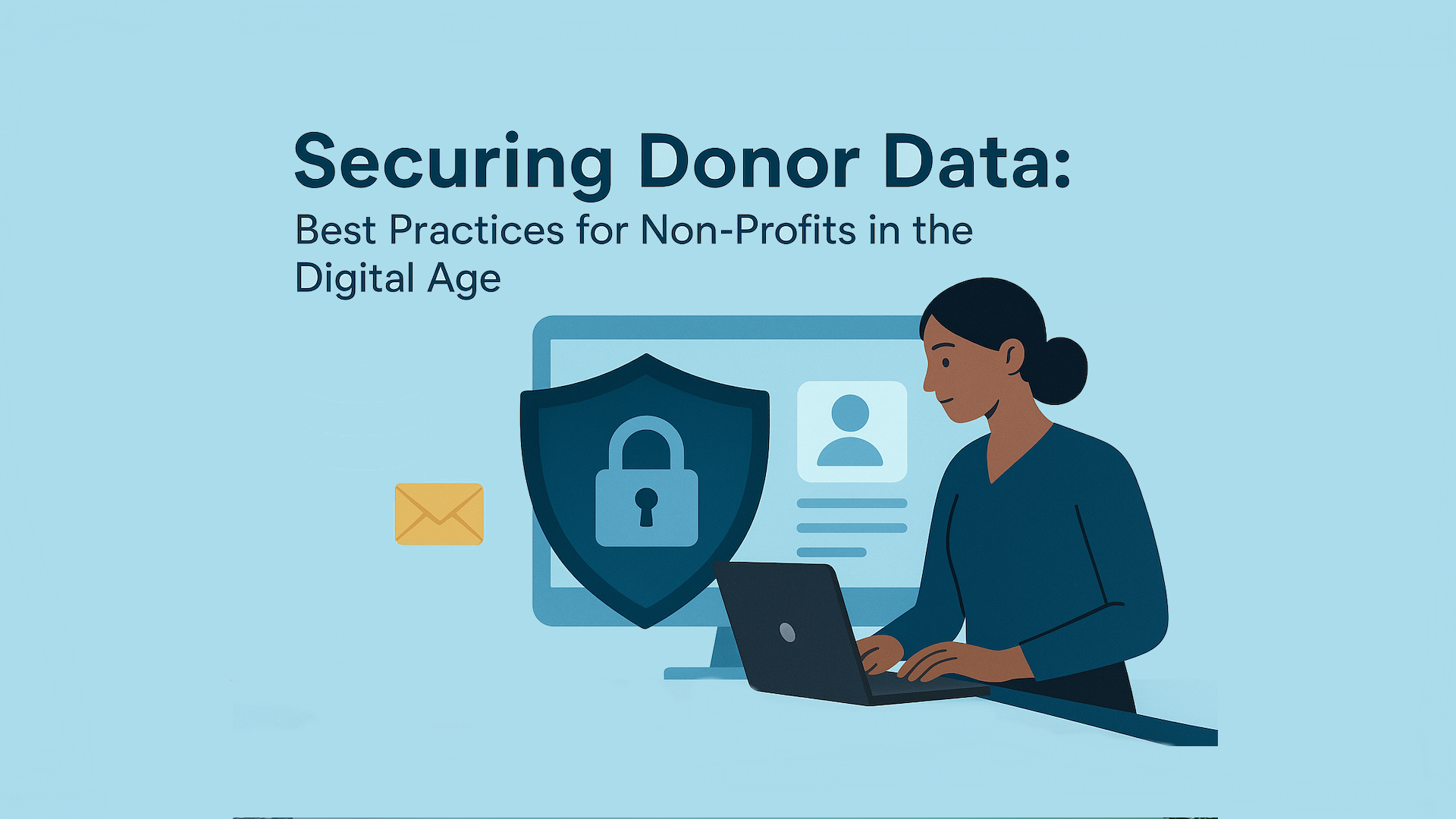
Securing Donor Data: Best Practices for Non-Profits in the Digital Age
- Web Development
-

By Jaydeep
- October 15, 2025
In today’s digital world, nonprofits rely heavily on technology to manage donations, communicate with supporters, and run fundraising campaigns. While these digital tools make fundraising easier and faster, they also create risks. Donor data, which includes personal information and payment details, is highly sensitive. A data breach can harm your nonprofit’s reputation, result in financial loss, and damage the trust of your supporters.
This guide provides practical strategies for securing donor data. It combines expert advice from leading nonprofit technology platforms and cybersecurity practices to help nonprofits protect their data effectively.
Why Donor Data Security Matters
Donor information is more than just a list of names and emails. It often includes addresses, phone numbers, donation history, and payment details. If this information is mishandled or stolen, it can lead to fraud, identity theft, and regulatory penalties.
Key reasons to prioritize donor data security:
- Protect Donor Trust: Donors expect their personal information to be safe. A single breach can lead to lost trust and decreased donations.
- Prevent Financial Loss: Fraud and cyberattacks can result in direct financial losses for your organization.
- Maintain Compliance: Nonprofits must follow data protection laws such as GDPR, CCPA, HIPAA, or FERPA depending on the type of data they collect. Failure to comply can result in fines.
- Ensure Operational Continuity: A breach can disrupt your fundraising campaigns, donor communications, and day-to-day operations.
Understanding Compliance and Legal Obligations
Nonprofits need to be aware of the legal rules around data privacy. Compliance helps protect donors and ensures your organization operates legally.
Key Regulations:
- GDPR (General Data Protection Regulation): Applies to nonprofits that collect data from European Union residents. Requires explicit consent, clear communication about data use, and data access rights.
- CCPA (California Consumer Privacy Act): Protects personal data of California residents. Nonprofits must provide transparency on data collection and allow donors to request access or deletion of their data.
- HIPAA (Health Insurance Portability and Accountability Act): For healthcare-related nonprofits, this ensures sensitive health information is protected.
- FERPA (Family Educational Rights and Privacy Act): Relevant for educational nonprofits handling student data.
Nonprofits should create internal policies covering data retention, user access management, and incident response. Regularly reviewing and updating these policies ensures ongoing compliance and protection.
Technology-Driven Security Measures
Technology plays a crucial role in keeping donor data safe. Modern nonprofit platforms and cybersecurity tools offer several ways to protect information.
Secure Software Solutions
Use donor management software that includes encryption, secure payment processing, and regular software updates. Look for features like:
- PCI compliance for handling payment data
- Tokenized payments to avoid storing sensitive data directly
- Automatic software updates to patch vulnerabilities
Real-Time Monitoring and Fraud Prevention
Nonprofits can benefit from platforms with real-time monitoring to detect suspicious activity. Fraud protection tools may include:
- Machine learning algorithms to identify unusual transactions
- Automated alerts to notify staff of potential threats
- Predictive analytics to anticipate and prevent fraud
Encryption and SSL Certificates
Ensure your website uses SSL certificates to encrypt data transmitted between users and your site. This prevents unauthorized access during online transactions and builds donor confidence.
Operational Best Practices
Security is not just about technology. Operational procedures play an important role in reducing risk.
Password Management
- Enforce strong, complex passwords for all staff accounts
- Implement multi-factor authentication (MFA)
- Regularly update and audit passwords
Access Control
- Assign user roles based on job responsibilities
- Limit access to sensitive data using the principle of least privilege
- Regularly review and update permissions
Layered Security
- Use firewalls, antivirus software, and regular security audits
- Back up data frequently to protect against ransomware or system failures
- Conduct vulnerability assessments to identify and fix weaknesses
Staff Training and Awareness
Employees are often the first line of defense against cyber threats. Proper training ensures staff can identify risks and respond appropriately.
- Train staff to recognize phishing emails and social engineering attempts
- Educate on proper handling of sensitive data
- Conduct regular drills or security awareness sessions
- Encourage reporting of suspicious activity
A culture of security within your nonprofit reduces human errors and strengthens overall protection.
Optimizing Donor Management Practices
Effective donor management can also improve data security.
- Segment Donors: Group donors by giving history, demographics, or engagement level to personalize communication without exposing unnecessary information.
- Track Engagement: Monitor donor interactions across multiple channels to understand preferences and prevent unauthorized access.
- Automate Processes: Use donor management software to automate acknowledgments, receipts, and follow-ups securely.
- Solicit Feedback: Ask donors about their preferences for data usage and communication, enhancing transparency and trust.
Long-Term Benefits of Donor Data Security
Implementing strong security measures offers lasting benefits:
- Enhanced Donor Confidence: Donors are more likely to contribute if they trust your organization to protect their data.
- Reduced Risk of Breach: Combining technology, operational procedures, and staff training minimizes the chance of cyberattacks.
- Operational Efficiency: Streamlined processes reduce errors, save time, and allow staff to focus on mission-driven work.
- Sustained Fundraising Growth: Protecting donor data ensures long-term fundraising success and strengthens your nonprofit’s reputation.
Frequently Asked Questions (FAQs)
Q1: What is the easiest way for nonprofits to start securing donor data?
Start with strong passwords, SSL certificates, and encryption for online transactions. Then implement staff training and secure software solutions.
Q2: How often should nonprofits review their data security policies?
Nonprofits should review policies at least annually and after any major software updates or regulatory changes.
Q3: Can small nonprofits afford robust cybersecurity measures?
Yes. Many affordable tools and cloud-based platforms offer strong security features suitable for small to mid-sized nonprofits.
Q4: How does donor segmentation improve security?
Segmentation ensures only necessary information is accessed by staff, reducing the risk of exposing sensitive donor data.
Conclusion
Securing donor data is essential for nonprofit success in the digital age. By combining compliance, technology, operational best practices, and staff training, organizations can protect sensitive information, maintain donor trust, and ensure long-term fundraising success.
Start implementing these best practices today. Review your data handling procedures, train your staff, and invest in secure software to safeguard your donor data and strengthen your nonprofit’s reputation.
Get A Quote
Reach Out and Bring Your Visions to Life
Get A Quote
Reach Out and Bring Your Visions to Life