

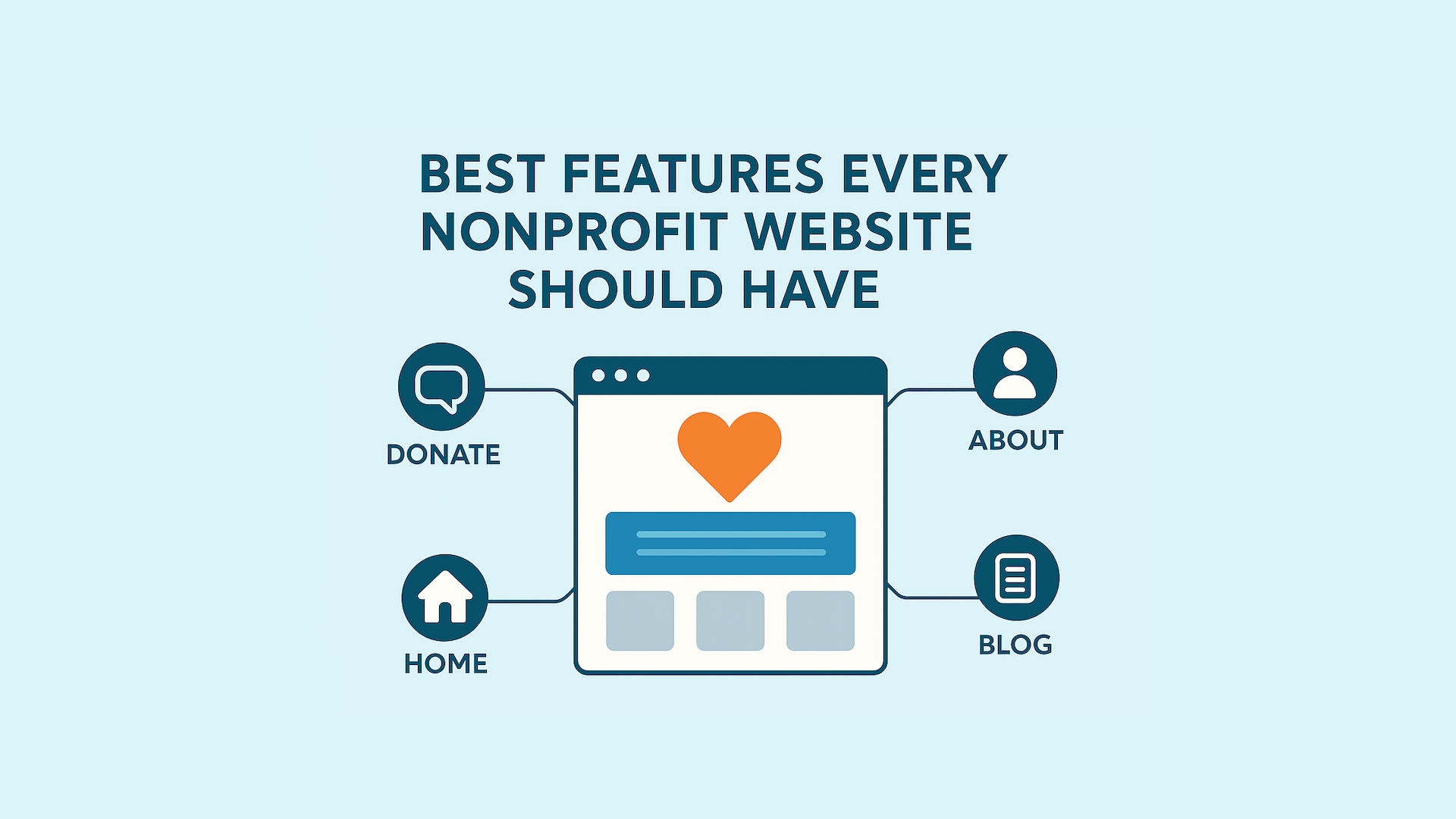
Best Features Every Nonprofit Website Should Have
- Web Development
-

By Jaydeep
- September 10, 2025
Nonprofit organizations depend on strong community support to achieve their goals. A website is often the first place people learn about your cause, make a donation, or sign up to volunteer. That means your site needs to be more than just attractive—it must be practical, trustworthy, and easy to use.
In this guide, we’ll explore the most important features every nonprofit website should have, explain why they matter, and show how they help nonprofits reach more people and raise more funds.
Why a Good Nonprofit Website Is Essential?
Your nonprofit website acts as:
- A digital hub – where supporters learn about your programs and mission.
- A fundraising platform – where donors give securely and conveniently.
- A trust builder – where transparency builds confidence in your cause.
- A volunteer connector – where people sign up to help and engage.
Without the right structure, you risk losing donations and missing volunteer opportunities.
Key Features Every Nonprofit Website Needs
1. A Clear Mission Statement
Visitors should immediately understand what your organization does and why it matters. Use simple, powerful language on your homepage.
- Example: “We provide free meals to homeless families in New York City.”
- Avoid vague or technical jargon.
2. Prominent Donation Button
Make giving easy. Your donation button should:
- Be visible on every page.
- Use strong action words (“Donate Now” instead of “Support”).
- Lead to a secure and short donation form.
3. Mobile-Friendly, Responsive Design
Most people browse on their phones. If your site doesn’t load fast or fit on small screens, visitors will leave. Responsive design ensures a smooth experience across devices.
4. Stories of Impact
Show supporters the difference they make. Use:
- Personal success stories
- Photos or videos of your work in action
- Testimonials from donors, volunteers, or beneficiaries
5. Volunteer Sign-Up Form
Give people a simple way to get involved beyond donations. Collect basic details (name, email, skills, availability) and provide automatic confirmation.
6. Event Calendar with Registration
List upcoming fundraisers, awareness events, or workshops. Let visitors RSVP or purchase tickets directly on your site.
7. Secure Online Giving
Donors need to feel safe. Always use SSL certificates and trusted payment gateways like PayPal or Stripe. Display trust signals such as “secure checkout” or third-party certifications.
8. Blog or News Section
Publishing fresh content helps attract traffic and show credibility. Write about:
- Community updates
- Fundraising campaigns
- Tips for supporters
- Industry news
Need a Nonprofit Website?
Let Codeclinic build a powerful, user-friendly nonprofit website that inspires action, drives donations, and builds trust. From secure donation systems to mobile-friendly design – we cover it all!
9. Social Media Integration
Make it easy for visitors to follow and share. Place social media buttons on your header, footer, and blog posts.
10. Transparent About Us Page
Be open about who you are and how funds are used. Include leadership profiles, impact reports, and financial statements. Transparency increases trust.
11. Easy Contact Options
Provide multiple ways to reach you: phone, email, contact form, and office address. Adding a Google Maps embed can help local supporters.
12. Accessibility for All Users
Your site should be usable by everyone, including people with disabilities. Add features like:
- Alt text for images
- High-contrast design
- Large, readable fonts
- Screen reader compatibility
13. Email Newsletter Signup
Collect emails and send regular updates about programs, events, and success stories. This is one of the best ways to retain donors.
14. Strong Calls-to-Action (CTAs)
Guide visitors to take the next step. Use clear CTAs such as:
- “Donate Now”
- “Join Our Newsletter”
- “Sign Up to Volunteer”
15. Analytics and Tracking
Use tools like Google Analytics to measure visitor activity. Track which pages lead to donations or volunteer sign-ups and adjust your strategy.
Frequently Asked Questions (FAQs)
Q1. How can a nonprofit website increase donations?
By adding a clear donation button, offering secure payment options, and showing impact stories, nonprofits can inspire more people to give.
Q2. What makes a nonprofit website trustworthy?
Transparency (sharing reports, financials, and team details), secure donation systems, and authentic testimonials build trust with visitors.
Q3. How do nonprofits attract volunteers online?
By including an easy-to-fill volunteer form, sharing upcoming opportunities, and sending follow-up emails to keep volunteers engaged.
Q4. Why is mobile optimization important for nonprofit websites?
Most users browse on their phones. If your site isn’t mobile-friendly, visitors may leave before donating or signing up.
Q5. Should every nonprofit have a blog?
Yes. A blog helps share updates, improve SEO, and position your nonprofit as an authority in your cause area.
Final Thoughts
A strong nonprofit website does more than look professional—it helps you raise funds, attract volunteers, and build trust. By including features like a mission statement, donation button, volunteer forms, secure systems, and transparency pages, you can turn casual visitors into lifelong supporters.
If your nonprofit website doesn’t yet include these essential features, it’s time to make improvements. At Codeclinic, we design websites that inspire action, boost donations, and build community trust.
Ready to upgrade your nonprofit website?
Get A Quote
Reach Out and Bring Your Visions to Life
Get A Quote
Reach Out and Bring Your Visions to Life