
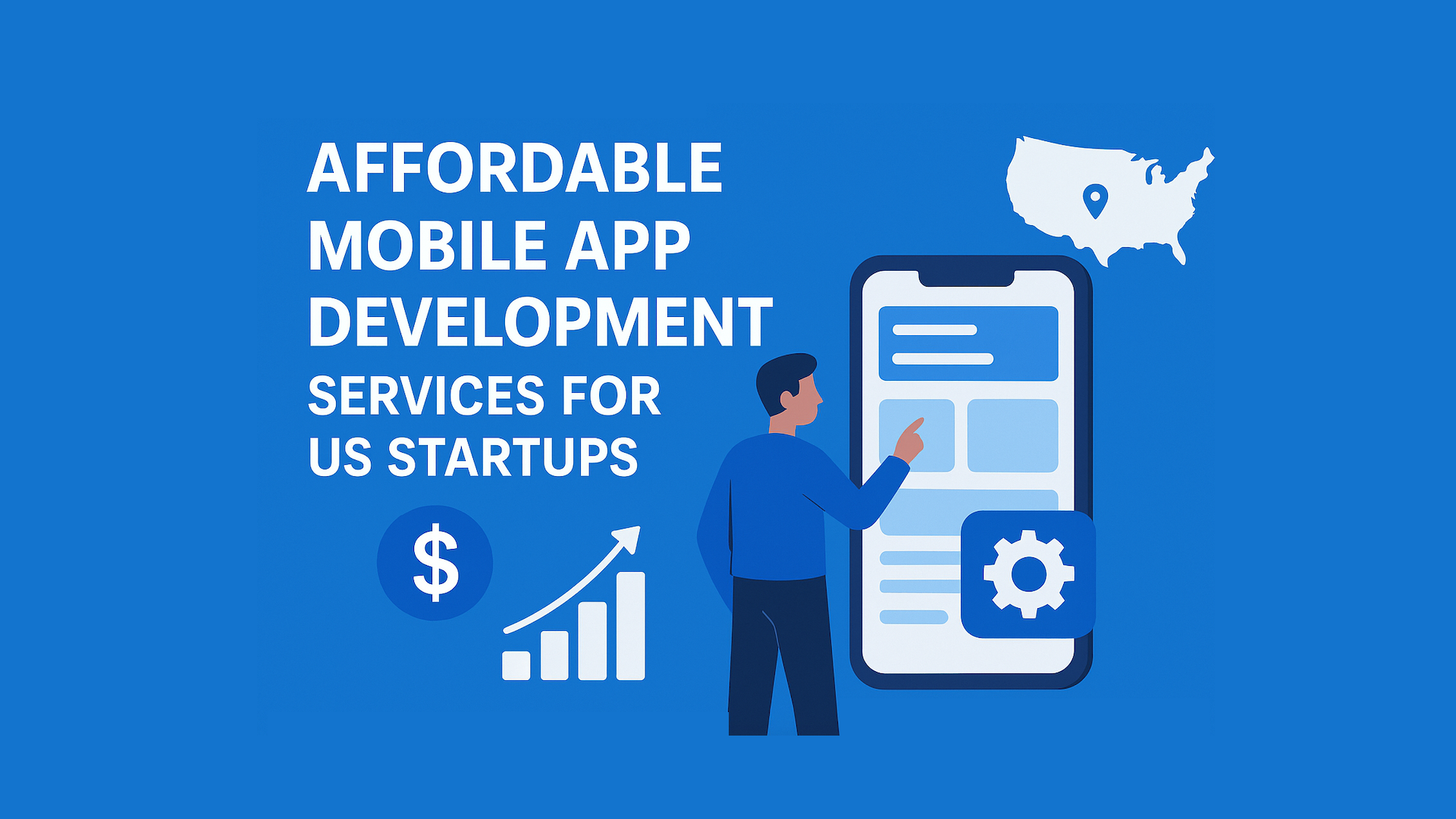
Affordable Mobile App Development Services for US Startups
- App Development
-

By Jaydeep
- October 13, 2025
Building a mobile app is no longer a luxury for startups in the United States—it’s a necessity. With the mobile app market expected to reach $935 billion in 2025, US startups are increasingly investing in mobile solutions to engage users, streamline operations, and grow revenue. However, one of the biggest challenges is the cost of development. High-quality app development can be expensive, but there are practical ways for startups to create effective, affordable apps without compromising quality.
This guide explores affordable mobile app development services for US startups, helping founders plan, budget, and choose the right development partners.
Why Mobile Apps Are Essential for US Startups
Mobile apps provide startups with unique advantages that help them compete in a crowded market:
- Brand Visibility and Engagement
Mobile apps allow startups to maintain a direct connection with users through push notifications, personalized offers, and loyalty programs. Engaging users directly on their smartphones increases brand recognition and retention.
- Customer Feedback and Insights
Apps provide startups with valuable data on user behavior, preferences, and usage patterns. This feedback can be used to improve the product and make better business decisions.
- Operational Efficiency
Many startups use mobile apps to automate workflows, manage inventory, or handle customer service. This reduces manual effort and improves operational efficiency.
- Revenue Growth
Mobile apps offer multiple monetization options, including in-app purchases, subscriptions, and advertisements, which can help startups generate revenue faster.
Understanding Affordable Mobile App Development
Affordable mobile app development does not mean cutting corners. Instead, it is about using resources efficiently and making informed decisions. Costs depend on several factors:
- Platform Choice: iOS, Android, or cross-platform frameworks such as Flutter or React Native. Cross-platform development is often more cost-effective for startups.
- Feature Complexity: Simple MVP apps are cheaper than apps with complex integrations, AR features, or AI capabilities.
- Design Requirements: Minimalistic, user-friendly design reduces cost, while custom animations and graphics increase it.
- Development Team Location: US-based developers typically cost more than offshore or hybrid teams. A combination of US project management with offshore development can optimize cost without compromising quality.
Estimated ranges for US startups: A simple MVP can cost between $5,000–$10,000, while mid-level apps may range from $20,000–$400,000, depending on complexity.
Planning Your App to Reduce Costs
Proper planning is key to affordability. Here are steps US startups can take:
- Define App Goals and Core Features
Focus on solving a specific problem or delivering a unique value. Avoid adding unnecessary features at the start.
- Validate Your Idea
Conduct surveys or create mockups to test the concept with potential users before development.
- Build a Minimum Viable Product (MVP)
An MVP allows startups to launch quickly with essential features, test the market, and iterate based on feedback.
- Prioritize Scalability
Plan your app architecture to accommodate future growth without costly redesigns.
- Iterative Development
Use Agile development methods to release small updates regularly rather than building a complete product all at once.
Startups that focus on these steps save resources, reduce development time, and avoid costly mistakes.
Cost-Saving Development Strategies
- Choose the Right Technology Stack
Cross-platform frameworks like Flutter and React Native reduce development costs by allowing one codebase for both iOS and Android.
- Outsource Strategically
Combine US-based project management with offshore development teams. This approach maintains quality while reducing labor costs.
- Leverage Pre-Built APIs and Cloud Services
Using APIs and cloud platforms reduces the need for custom backend development, saving time and money.
- Automate Testing and CI/CD
Continuous Integration and automated testing decrease manual QA effort, improve code quality, and accelerate release cycles.
- Use Open-Source Libraries
Reusable libraries and frameworks speed up development and lower costs.
- Develop in Phases
Build the app in stages, releasing new features progressively. This avoids overspending and allows the team to focus on what users need most.
How to Choose the Right App Development Partner
Finding the right partner can make or break a startup’s success. Here’s a checklist:
- Review Portfolio
Look for experience with startups and apps in your industry.
- Check Client Testimonials
Verified reviews show credibility and reliability.
- Ensure Transparent Pricing
Avoid hidden fees. The partner should provide clear estimates and milestones.
- Confirm Post-Launch Support
Maintenance, updates, and bug fixes are essential for long-term success.
- Data Security and IP Ownership
Ensure the partner follows best practices for confidentiality and intellectual property.
Common Mistakes to Avoid:
- Choosing the cheapest option without checking quality
- Ignoring communication and cultural fit
- Neglecting proper documentation or maintenance agreements
Step-by-Step Affordable App Development Process
- Discovery & Market Research
Understand your users, competitors, and industry trends.
- Design & Prototyping
Create wireframes and prototypes to visualize the app and gather early feedback.
- MVP Development
Build a basic version with core features for early market testing.
- Testing & Quality Assurance
Conduct both manual and automated testing to ensure performance, usability, and security.
- Launch & Marketing
Optimize app store listings, implement pre-launch marketing, and monitor user engagement.
- Maintenance & Scaling
Collect user feedback, release updates, and scale infrastructure as user demand grows.
Frequently Asked Questions
Q1: How long does it take to develop an MVP?
A: Typically 3–5 months depending on complexity and team size.
Q2: Is outsourcing safe for US startups?
A: Yes, if you choose a transparent partner with NDAs, SLAs, and proper data protection.
Q3: Can I get funding after launching an MVP?
A: Many startups secure seed funding post-MVP once they demonstrate traction and user interest.
Q4: How can I keep my app affordable long-term?
A: Use modular architecture, optimize cloud costs, and iterate based on user feedback.
Q5: What is the most cost-effective platform for startups?
A: Cross-platform frameworks like Flutter or React Native allow one codebase for iOS and Android.
Conclusion
Affordable mobile app development for US startups is possible with smart planning, strategic technology choices, and the right development partner. Start small, focus on essential features, and use iterative development to manage costs effectively. By following this guide, startups can build apps that engage users, generate revenue, and scale efficiently without exceeding their budgets.
If you are a US startup ready to build your affordable mobile app, contact our expert development team today for a free consultation and cost estimate. Start your journey toward a high-quality app that fits your budget.
Get A Quote
Reach Out and Bring Your Visions to Life
Get A Quote
Reach Out and Bring Your Visions to Life